Sound and Resonance
Vibration, Regulation and Coherence
How Sound Influences Health, Regulation, and Coherence
Sound is a form of mechanical energy that travels through tissues, fluids, and structures. In quantum biology, sound and vibration are understood as regulatory inputs that influence biological organization.
This pillar explores how resonance, rhythm, and vibration affect nervous system regulation and tissue communication.

Vibration as Biological Input
Living systems respond to:
- Mechanical oscillations
- Rhythmic patterns
- Resonant frequencies
These inputs can influence tone, coordination, and regulation across systems.
Resonance and Coherence
Resonance refers to how a system responds when exposed to matching frequency. In biology, resonance can:
- Support cellular coordination
- Enhance communication
- Promote efficient signaling
Disruption of rhythm and resonance may contribute to dysregulation.
WATCH BELOW: Sound and Resonance
This video explores how sound and vibration interact with biological systems and regulation.
Sound in the Larger Approach
Sound interacts with:
- Fascia and connective tissue
- Nervous system regulation
- Bioelectric signaling
It represents another pathway through which the environment shapes biology.
Continue Learning
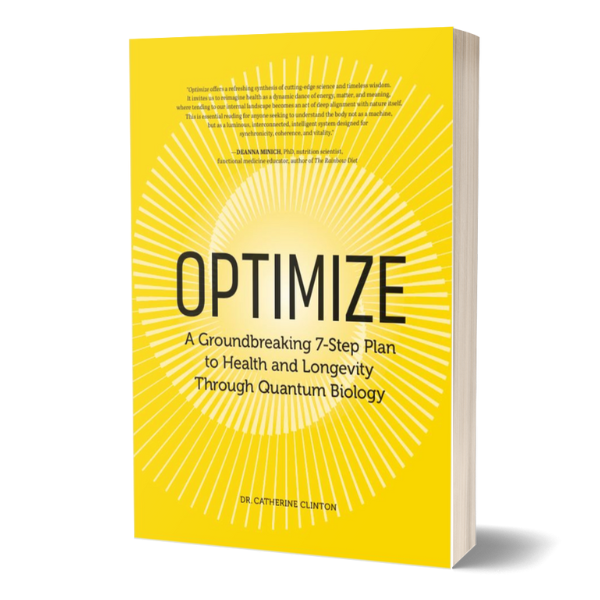
The role of resonance and regulation is integrated into the broader framework presented in Optimize and explored further in courses.
GET THE BOOK: Optimize
FOR A DEEPER DIVE: Explore Quantum Biology Courses